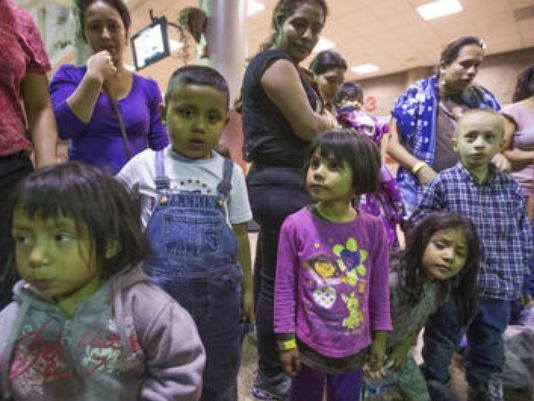
 Drowning in the Mediterranean or ransomed on the Southwest border, migrants are on the edge of survival.
Driven by war, violence and poverty in the Middle East and Central America, people are making a perfectly rational decision. Flee danger to seek a safer life in the north.
As a result, countries struggle to find solutions. The Washington Post wrote:
More than any other nation in the region, Germany is grappling with the influx, suggesting the haphazard way the continent is managing the crisis.
This nation of 82 million absorbed more asylum-seekers than any other in the region last year,sheltering 173,000. By comparison, the United States, with nearly four times the population, received an estimated 121,200 asylum claims in 2014, mostly from Mexico and countries in Central America. Last month alone, Germany saw 28,681 new applicants — a 192 percent surge over the same period last year.
Put aside the disproportionate freakout by the United States for a moment.
If we are witnessing one of the biggest displacements of people since World War II, our response should certainly build on thousands of years of human history. To greatly oversimplify, moral leadership will define the political discourse as countries work to manage refugees, asylees and immigrants at their border.
Without moral leadership, the politics of fear will drive policy decisions. And, sadly, human history is littered with examples of migrants driven to their end by the politics of fear.
Finally, what is missing is a greater understanding of how our foreign policy decisions drive migration. War, violence, poverty in the Middle East, Africa and Central America are all impacted by the decisions of economic powers.
To pretend our actions take place in a vacuum is as delusional as it is irresponsible.
* If you like the post, feel free to give it a share. Much appreciated.
