
We love to debate religion.
It may not always be pretty, and sometimes gets fairly ugly, but the role of religion is core to our national sense of self.
These days, this debate plays out between the poles of individual and religious liberty when it comes to the definition of marriage.
I admire and respect friends on both sides of this debate. I may not know precisely how they reach an uneasy compromise, but I am confident they will.
Because, as much as we debate religion, we also do a halfway decent job as a nation of resolving these debates. We negotiate a truce and move onto the next battle.
What we don’t want to debate, and what we seem unable to resolve, are issues of race and class.
Which is why I want to scream when someone tells me, “The immigrant rights movement should learn something from the LGBT rights movement.”
Sorry, a debate about liberty is not a debate about race and class.
A debate framed as a white computer engineer seeking individual liberty versus a white pastor seeking religious liberty is not the same as a poor Mexican farmworker seeking legal status versus a poor white carpenter seeking sustainable employment.
Sure, the data shows immigration is a net benefit to our economy. But, none of us think of ourselves as data points. The farmworker and the carpenter are real people, with families, with dreams, with worries.
A sterile debate driven by statistics doesn’t reflect their emotion – it only increases the emotion.
Therefore, immigration leads to an ugly exchange driven by the uneasy tension of race and class. A debate that lacks the values framework of marriage; a framework that allows it to be uneasily – but authentically – addressed.
To their credit, the same factions dueling over the idea of liberty find themselves working together to address immigration reform, and the issues of race and class underneath it.
On the business side, Walmart opposed the Arkansas version of a ‘religious freedom’ law has long been a proponent of immigration reform. Apple, Salesforce, Facebook and many others have taken similar positions on both issues.
And, in the traditionally progressive community, labor organizations such as SEIU have long supported immigration reform and same sex marriage.
On the other hand, while social conservatives such as the Catholic Church or the Ethics and Religious Liberty Commission of the Southern Baptist Convention have supported religious liberty laws and opposed same sex marriage, they are also leading efforts in their own community to address immigration reform – the recent ERLC conference on racial reconciliation a poignant example.
These are just a few of the hundreds, if not thousands, of leaders engaging in an immigration debate buffeted by the winds of race and class.
It is good to see this number of people growing in number and influence. But, we need many more to engage.
Perhaps the question when it comes to immigration isn’t, whether or not we can reach a resolution?
Rather, are we willing to address issues of race and class with the intensity we give religion?
Or, does religion provide a values framework that can be applied more directly to race and class?
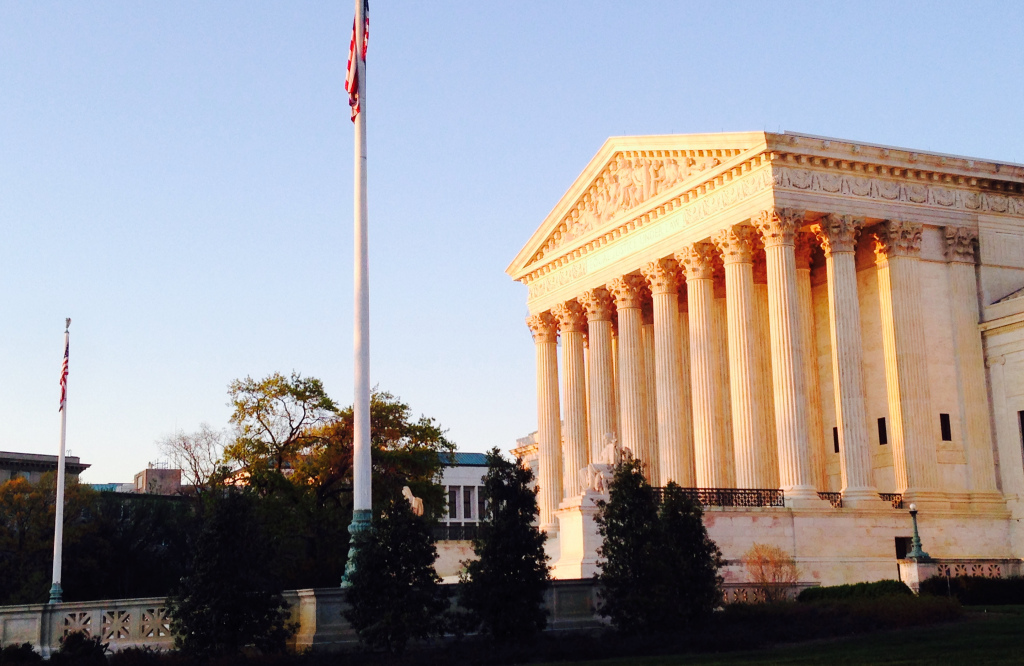
In the coming months the Supreme Court will take up the issue of same sex marriage. Terabytes of digital ink will be spilled describing the emotion behind the debate.
The language will be equality versus liberty and the images will, by and large, contrast definitions of loving white families debating their definition of morality and justice. A truce will be reached, and we will move on.
In the same period, as Obama’s November 2014 executive actions on immigration make their way through the courts, immigrants will be a topic of debate.
The language will be legal versus illegal. The images will be brown versus white.
Morality and justice will be overshadowed by legality and politics. There will be no truce.
Sadly, when it comes to immigrants and immigration, we have a lot of work to do before we can move on.

Reblogged this on Onward Through the Fog and commented:
Watching the important debate on marriage and the tragedy of Baltimore reminded me of this post. Liberty is not the same as race and class.
LikeLike